The journey from metal keys to contactless RFID access cards spans several decades of innovation, each step driven by the twin demands of guest convenience and property security. Understanding this evolution provides context for why RFID technology has become the global standard — and where the technology is heading next.
The Mechanical Key Era
For most of hotel history, guests received a physical metal key. While simple and reliable, mechanical keys presented security challenges: they could be copied, lost keys required lock changes, and there was no audit trail of who entered a room and when. Hotels maintained large key cabinets and employed staff to manage key distribution.
Magnetic Stripe Revolution (1970s-2000s)
The introduction of magnetic stripe keycards in the 1970s, pioneered by VingCard (now ASSA ABLOY), transformed hotel access. Magstripe cards could be reprogrammed for each guest, eliminating the rekeying problem. However, magnetic data degrades with use, cards demagnetise near smartphones and wallets, and the technology offers minimal encryption.
The RFID Standard (2000s-Present)
RFID contactless technology, led by NXP's MIFARE family, addressed the shortcomings of magnetic stripe. RFID cards have no moving parts to wear, data does not degrade, and modern chips offer sophisticated encryption. The contactless tap-to-unlock experience is faster, more reliable, and more intuitive for guests. Today, MIFARE-based RFID keycards are the global hotel standard.
What Comes Next
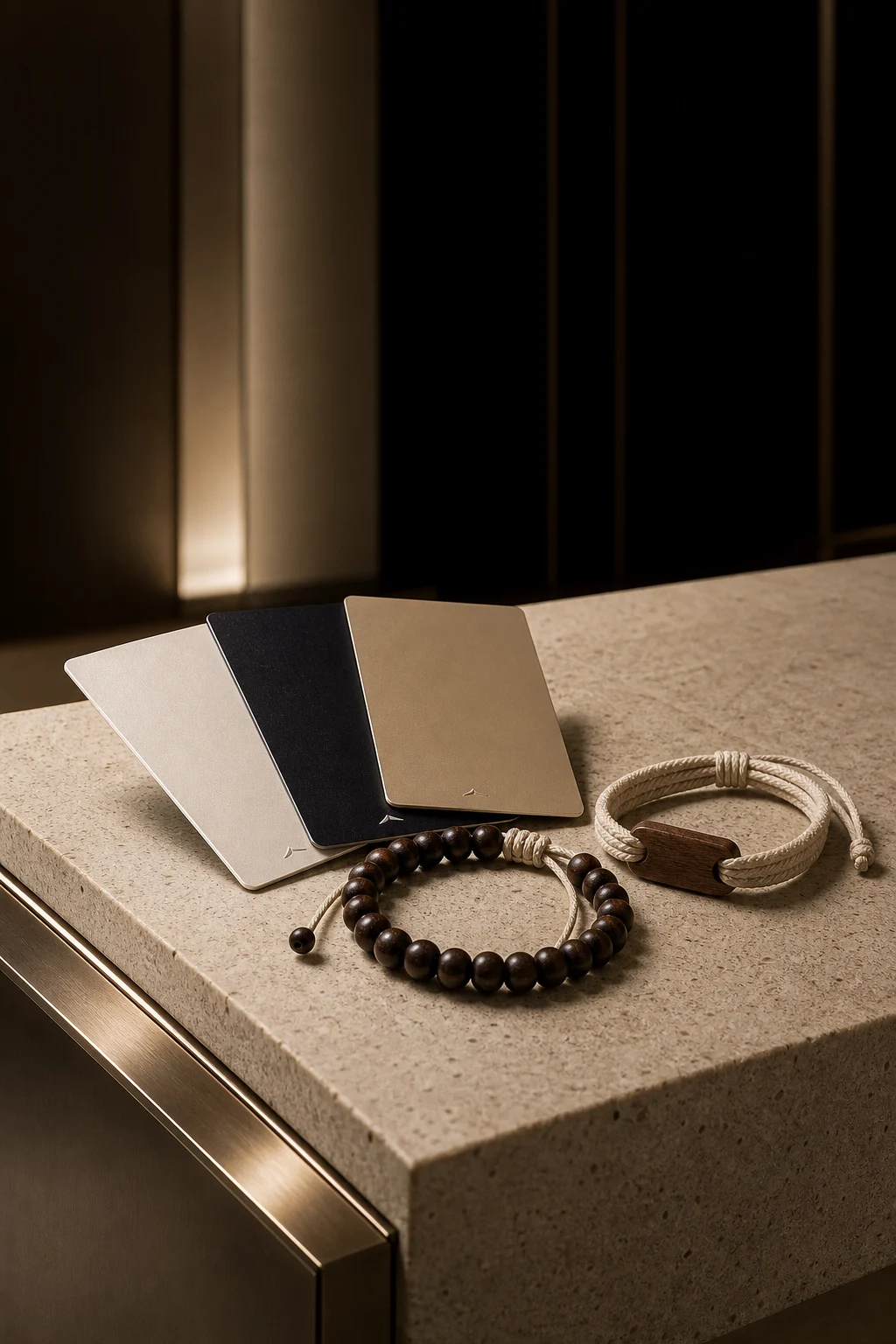
The next frontier is multi-modal access: physical RFID keycards working alongside mobile keys (smartphone-based Bluetooth and NFC), biometric authentication (fingerprint, facial recognition), and wearable credentials (RFID wristbands, smartwatches). Rather than replacing physical keycards, these technologies complement them — offering guests a choice of access methods while maintaining a reliable physical fallback.